
Gaines County Court Records After Arrest
Court records after a jail arrest in Gaines County follow a practical sequence: arrest, booking at the Gaines County Law Enforcement Center / Gaines County Jail, first appearance or magistrate review, prosecutor charging decision, and then a court case record. Process: arrest -> booking -> first appearance -> prosecutor files charges -> court record opens. The jail side shows custody facts such as booking, release, or holds. The court side shows what charge was filed, what court took the case, whether bond was set, and how the charge later changed. That distinction matters because a booking charge can be a starting point rather than the final charge.
For current custody and booking details, use the sheriff and jail route described in Gaines County jail inmate records. Booking photos and request limits are handled separately through Gaines County jail mugshots. Court records after an arrest belong with the clerk or court system once the case is filed. In Gaines County, that can mean the District Clerk for district criminal cases, the County Clerk or a justice court for lower-level matters, and the 106th Judicial District Attorney when formal felony charges are being prepared or pursued.
Find Gaines Court Records
The statewide court-record access point for participating Texas courts is re:SearchTX. It is a Texas court-record portal for participating courts, and document access can depend on account status, court participation, record type, and fees. It does not replace a local clerk when a record is older, sealed, not yet indexed, or only available through the courthouse. For Gaines County court records after an arrest, begin with the defendant name and any case or cause number found from jail, bond, or clerk contact.
The Gaines County District Clerk is the local office identified for district-level records and expunction resources. The office is in Room 311 at 101 S Main St., Seminole, TX 79360, with phone (432) 758-4013 and fax (432) 955-1013. The 106th District Court lists Judge Reed Filley, P.O. Box 1268, Lamesa, TX 79331, and phone (806) 872-3740. Lower-level records may involve the County Clerk or Justice of the Peace Precinct 1, depending on the case type.
The official statewide portal appears on the re:SearchTX court-record search page.
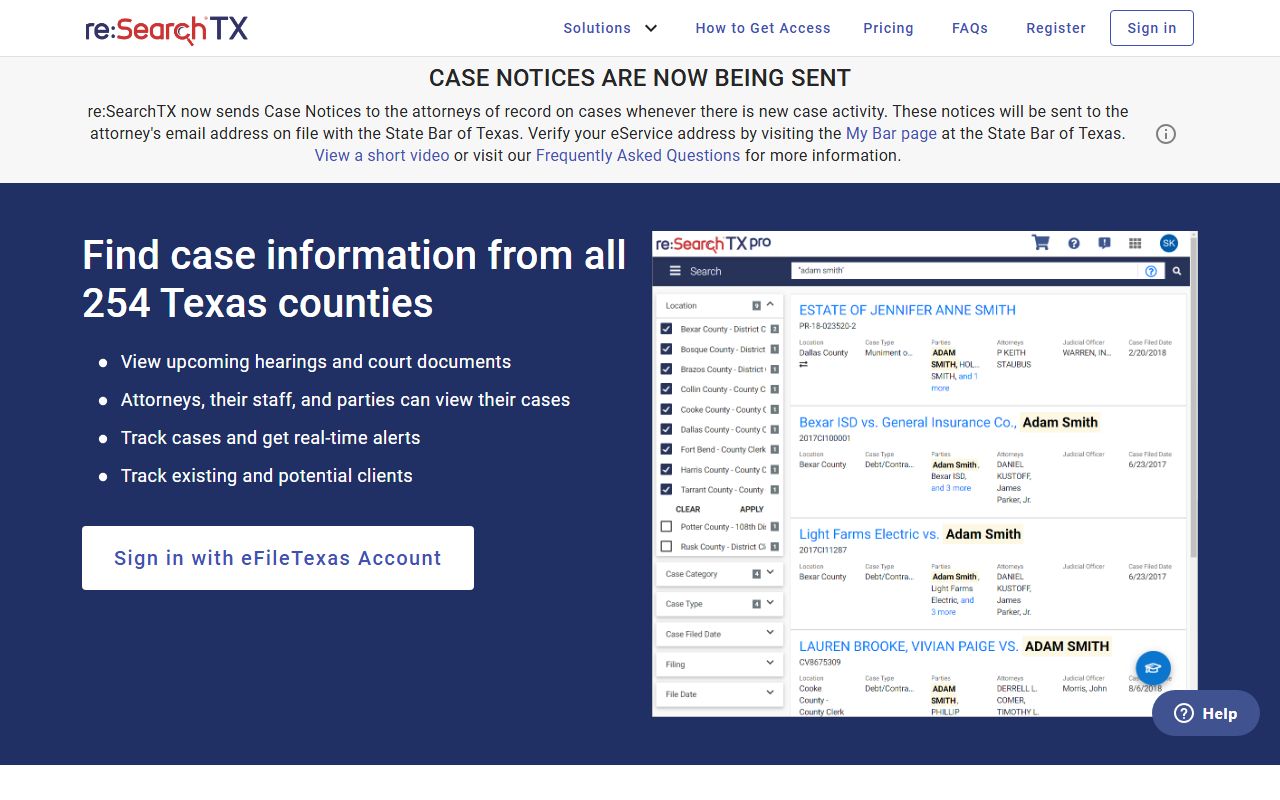
Use that portal as a case-search starting point, then confirm filed charges and copies with the correct Gaines County clerk when the portal result is missing or incomplete.
| Search Field | Use | Gaines County Note |
|---|---|---|
| Name or party | Searches by defendant or party name where available. | Use the full legal name from the jail or bond record when possible. |
| Case number | Targets a known cause or case number. | Ask the clerk for the exact format if a phone result does not match online. |
| Court or county filter | Narrows the search to a court or county if the portal exposes the filter. | Select Gaines County or the specific court when that option appears. |
| Document access | Controls whether filings can be viewed, purchased, or requested. | Some documents may require clerk contact, account access, or redaction review. |
Gaines Arrest to Court Record
The court record does not usually open at the same instant as booking. A person can be arrested and held while the case is still moving through the first appearance, bond, and prosecutor-review stages. The 106th Judicial District Attorney is the prosecutor office identified in official Gaines County sources for district-level criminal charging context. The county phone directory lists the 106th District Attorney at (432) 758-4660, and the District Clerk's expunction PDF lists the office at PO Box 1124, Lamesa, TX 79331, with Philip Mack Furlow appearing in the official expunction context.
Once the prosecutor files a charge, the court record may show a complaint, information, indictment, or later amended filing. A complaint is a sworn criminal allegation or charging document used in some cases. An information is filed by a prosecutor, often without grand-jury indictment where Texas procedure allows it. An indictment is a grand-jury charging instrument, commonly associated with felony prosecution. A filed charge can differ from the arrest label because prosecutors may add facts, reduce a charge, decline a charge, or pursue a different offense level.
| Document | Who Uses It | What It Means After Arrest |
|---|---|---|
| Complaint | Officer, complainant, or prosecutor depending on the case path. | Sets out an allegation that can support a criminal case or early court action. |
| Information | Prosecutor. | Formally files a charge in court without a grand-jury indictment where allowed. |
| Indictment | Grand jury. | Charges a felony or other grand-jury matter after the grand jury acts. |
Note: A jail booking charge is an intake label; the court's charging document is the record that drives prosecution.
Gaines Charge Status Records
Charge status is the part of a court record that tells whether a case is pending, changed, dismissed, resolved by plea, resolved by trial, or otherwise closed. A single arrest can produce more than one charge, and each charge can have a different status. Court records after a jail arrest should be read line by line. One dismissed count does not always mean every count is dismissed. One bond order does not always clear a hold from another agency.
| Status | Plain Meaning | Record Check |
|---|---|---|
| Pending | The filed charge is still open. | Check the next setting, bond order, and any amended filings. |
| Amended or reduced | The charge changed from the original filing. | Compare the amended document with the booking charge and first filing. |
| Dismissed | The court record shows the charge was ended without conviction on that count. | Confirm whether other counts or related cases remain open. |
| Plea or conviction | The defendant was found guilty or entered a plea accepted by the court. | Read the judgment, sentence, probation, jail credit, and fine or cost entries. |
| Warrant or capias active | A court order may command arrest or appearance. | Call the issuing court or clerk before appearing in person. |
Bond and Warrant Records
Texas bond rules are governed by Code of Criminal Procedure Chapter 17. Gaines County official pages did not publish a local bond schedule, bond desk page, or payment-method list. That makes verification important. The sheriff and jail route at the Gaines County Law Enforcement Center / Gaines County Jail can address custody and release eligibility, while the court or clerk record can show the bond order after it has been entered. Ask whether all holds are cleared, not just whether one charge has a bond amount.
Warrant records follow a similar split. Code of Criminal Procedure Chapter 15 covers arrest under warrant. No official Gaines County active-warrant database, sheriff warrant list, or most-wanted search was located on county pages. A bench warrant or capias may appear in a court record, but re:SearchTX is not a complete active-warrant search. Justice of the Peace Precinct 1 lists phone (432) 758-4015 for some lower-level matters. The District Clerk lists phone (432) 758-4013 for district case records after filing.
- Cash bond
- Full cash is posted as required by the court or jail procedure.
- Surety bond
- A licensed bail bond company posts bond for the defendant.
- Personal bond or PR bond
- Release is based on a promise to appear and court-set conditions.
- No-bond hold
- The person cannot be released by ordinary bond at that time.
- Detainer
- Another agency asks the jail to hold or notify before release.
Charges Versus Convictions
An arrest, a charge, and a conviction are three different stages. An arrest means a person was taken into custody. A charge means an allegation has been listed at booking or filed in court. A conviction means the case ended with a guilty plea, verdict, or other finding that carries a conviction. Texas DPS offers a separate criminal history name search route for statewide conviction and criminal-history data, but that is not the same as a local jail roster or a full court case file.
| Record Type | What It Shows | What It Does Not Prove |
|---|---|---|
| Arrest or booking | Custody intake, arresting agency, and initial charge label. | It does not prove guilt or final prosecution. |
| Filed charge | The prosecutor or court accusation in the case record. | It does not prove conviction by itself. |
| Conviction | A plea, verdict, judgment, sentence, or other final conviction entry. | It may not show every booking detail or mugshot. |
Restricted Gaines Court Records
Texas public access starts with Government Code Chapter 552, the Public Information Act. Court and law-enforcement records can still be limited by active-investigation issues, privacy rules, juvenile confidentiality, sealed records, expunction orders, and other statutes. Section 552.108(c) is important because the law-enforcement exception does not remove basic information about an arrested person, an arrest, or a crime from disclosure, but that does not make every page, photo, witness detail, or investigative note public.
The District Clerk page is the official local source for district clerk details and expunction resources. The Gaines County District Clerk page lists court-record contact details and expunction resources.
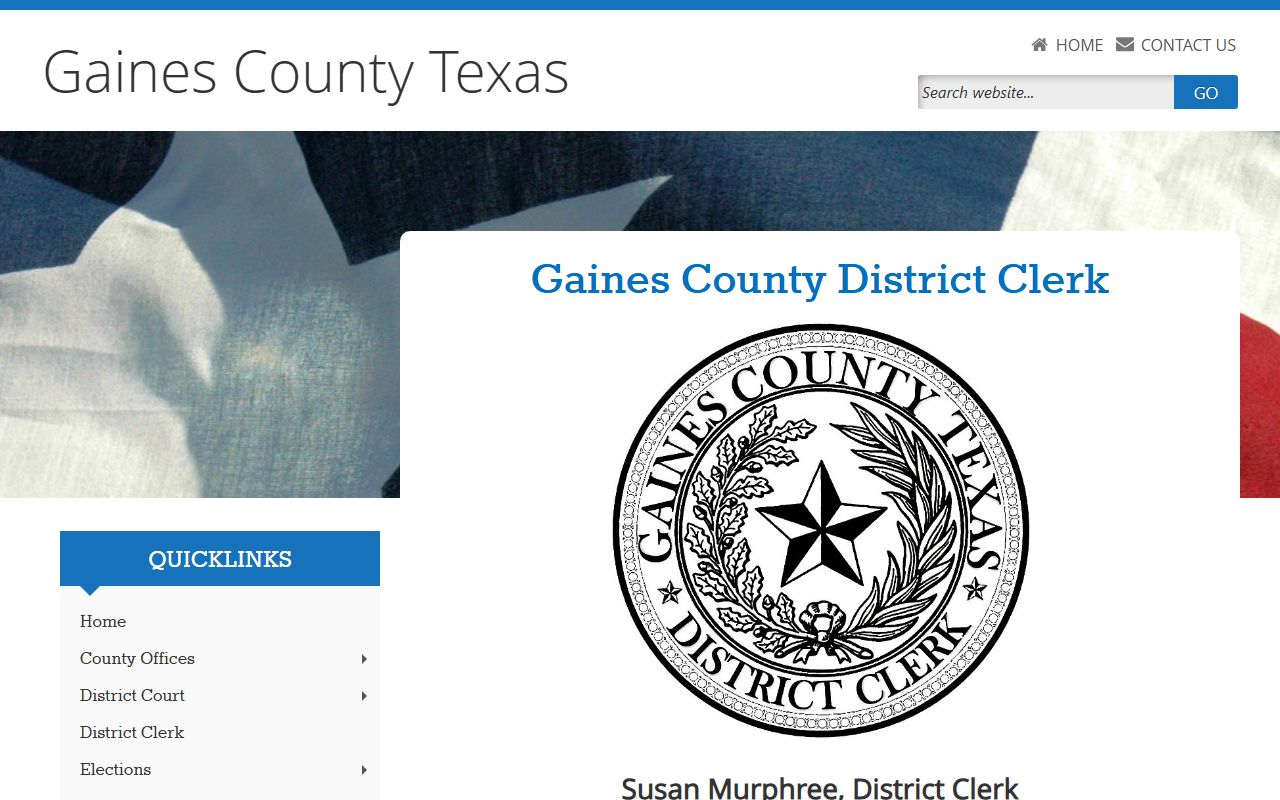
That office is the better route for district case copies and expunction-related filing context after the jail record has moved into a court case.
| Record Treatment | Plain Meaning | Texas Source |
|---|---|---|
| Public with limits | Basic arrest and case information may be available, while sensitive parts are withheld or redacted. | Government Code Chapter 552, including Section 552.108(c). |
| Sealed or non-disclosed | Public access is limited by a court order, though some agencies may retain limited access. | Texas non-disclosure and sealing practice depends on the exact case path. |
| Expunged | Qualifying records may be destroyed, removed, or treated as not having occurred. | Code of Criminal Procedure Chapter 55. |
Important: Court records after an arrest may be incomplete online; verify filed charges, dispositions, and restrictions with the originating clerk.